
Topics
Growth Mindset
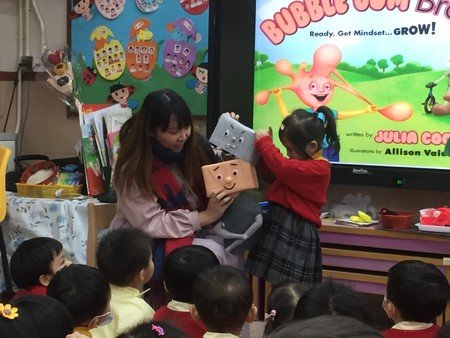
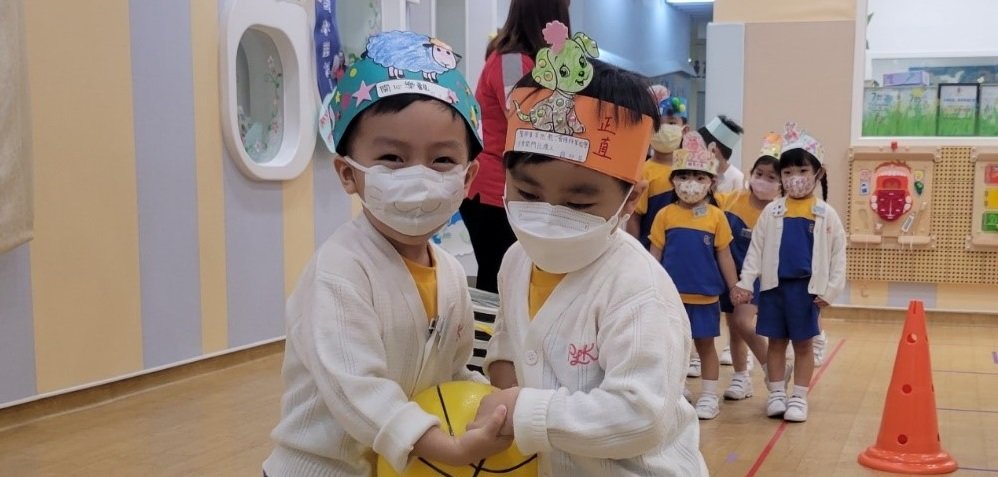
Mindset theory indicates whether the belief of intelligence and capability can be changed will affect one's dedication, motivation and performance directly. People with growth mindset are more willing to accept challenges and put effort on finding effective solutions. On the contrary, people with fixed mindset may think successful life is based on talent, whereas character, intelligence and capability are unchangeable. They tend to avoid challenges. According to Dweck (2006), mindsets can be changed under different situations. Developing growth mindset can alter the brain neuroplasticity which leads to the change of behaviours.
Character Strength

Scholars have done research to summarise 24 character strengths into 6 virtues (Peterson & Seligman, 2004). Everyone has 24 character strengths but the extent of development may vary. The use of character strengths emphasizes on acting out one's values. People are encouraged to use their own character strengths to overcome challenges and enhance happiness (Harzer & Ruch, 2012).
Positive Emotion
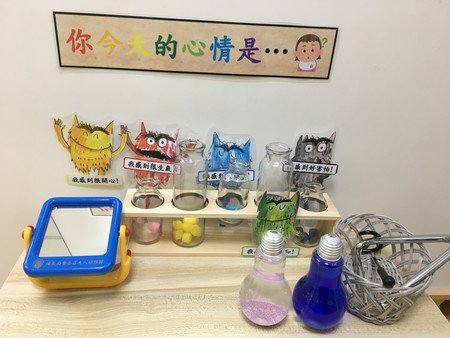
Each emotion has its own function, even the feeling of pain is real and essential. There are unbreakable relationships between emotion, cognition, body reaction and behaviour (Beck, 1971). Since positive emotions are usually short-lived and hard to be detected, people are encouraged to build up habits in promoting positive emotions such as mindfulness (Geschwind et. al., 2011) and gratitude (Fredrickson, 2004).
Positive Health
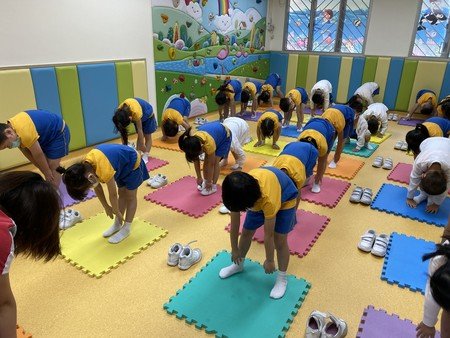
According to the World Health Organisaiton (1948), 'Health' is a state of complete physical, mental and social well-being and not merely the absence of disease or infirmity. In our project, this topic focuses on exercise and sleep. The benefits of regular exercising and the importantce of quality of sleep are discussed. Literature has suggested that regular exercising and good quality of sleep make positive impact on brain health (John, 2015; Xie et. al., 2013) and improve quality of learning and attention (Shonkoff et. al., 2011; Van Dongen et. al., 2003).
Positive Relationship
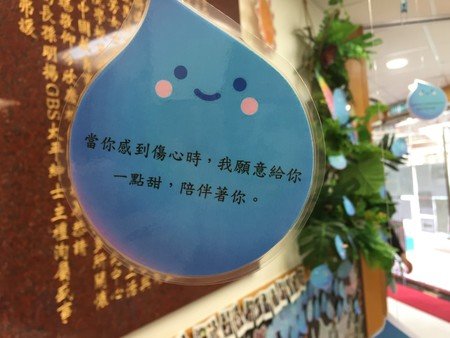
Humans' social needs and ability are innate. Building a good social relationship increases happiness (Epley & Schroeder, 2014) which is good for both physical and mental health (Myers, 2000; Diener & Seligman, 2002). By the 'Bucket and Dipper' theory, we will be happier when we help and be kind to others based on their needs. Furthermore, our trainings also introduced the Five Love Languages (Chapman, 2008) to teach students to express care.
Positive Purpose
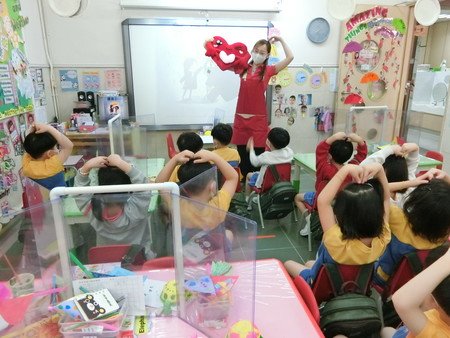
People who understand the meaning of life, especially for those who have self-transcending values, for exmaple, 'Altruism' (Dunn, 2014), 'Relationship' (Boothby et. al., 2014) and 'Experience' (Van Boven & Gilovich, 2003). In our project, we guide teachers and parents to understand the meanings of different life roles and the method of expressing 'Kindness' in order to achieve 'Ripple of Kindness'.
1. Beck, A. (1971). Cognition, Affect, and Psychopathology. Archives Of General Psychiatry, 24(6), 495.
2. Boothby, E., Clark, M., & Bargh, J. (2014). Shared Experiences Are Amplified. Psychological Science, 25(12), 2209-2216.
3. Chapman, G. (2008). The Heart of the Five Love Languages. Chicago: Northfield Publishing.
4. Diener, E., & Seligman, M. (2002). Very Happy People. Psychological Science, 13(1), 81-84.
5. Dunn, E., & Norton, M. (2014). Happy money. New York: Simon & Schuster Paperbacks.
6. Dweck, C. (2006). MINDSET: THE NEW PSYCHOLOGY OF SUCCESS. New York: Ballantine Books.
7. Epley, N., & Schroeder, J. (2014). Mistakenly seeking solitude. Journal Of Experimental Psychology: General, 143(5), 1980-1999.
8. Fredrickson, B. L. (2004). Gratitude, like other positive emotions, broadens and builds. The psychology of gratitude, 145, 166.
9. Geschwind, N., Peeters, F., Drukker, M., van Os, J., & Wichers, M. (2011). Mindfulness training increases momentary positive emotions and reward experience in adults vulnerable to depression: a randomized controlled trial. Journal of consulting and clinical psychology, 79(5), 618.
10. Harzer, C., & Ruch, W. (2012). When the job is a calling: The role of applying one's signature strengths at work. The Journal of Positive Psychology, 7(5), 362-371.
11. John J. Ratey. (2015). In speech “Optimizing your brain with exercise”. MIT Media Lab.
12. Myers, D. G. (2000). The funds, friends, and faith of happy people. American psychologist, 55(1), 56.
13. Peterson, C., & Seligman, M. E. (2004). Character strengths and virtues: A handbook and classification (Vol. 1). Oxford University Press.
14. Shonkoff, J. P., et al. (2011). Building the brain’s “air traffic control” system: How early experiences shape the development of executive function. Contract, 11.
15. Van Boven, L., & Gilovich, T. (2003). To do or to have? That is the question. Journal of personality and social psychology, 85(6), 1193.
16. Van Dongen, H., Maislin, G., Mullington, J. M., & Dinges, D. F. (2003). The cumulative cost of additional wakefulness: dose-response effects on neurobehavioral functions and sleep physiology from chronic sleep restriction and total sleep deprivation. Sleep, 26(2), 117-126.
17. World Health Organization. (1948). Frequently asked questions. Retrieved from http://www.who.int/suggestions/faq/en/
18. Xie, L., Kang, H., Xu, Q., Chen, M. J., Liao, Y., Thiyagarajan, M., & Nedergaard, M. (2013). Sleep drives metabolite clearance from the adult brain. science, 342(6156), 373-377.